


Can You Get HIV from One Time? What’s the Risk%?
Many people who have had unprotected sex immediately wonder, “Can you get HIV from one time?” This concern is common and can cause significant anxiety, sometimes beyond what the actual risk warrants.
From a medical perspective, the answer is that transmission is possible, but the level of risk varies depending on the type of sexual activity, protective measures used, and the partner’s health status.
This article explains the actual transmission risk, key influencing factors, and appropriate next steps after a potential exposure so you can make informed decisions based on accurate medical information.
Can You Get HIV from One Time?
Yes, it is possible to get HIV from a single sexual encounter. However, the level of risk varies depending on the type of sexual activity, whether protection was used, and the partner’s treatment status. If the partner has HIV and is not on effective treatment, the risk of transmission is higher.
In general, the per-act transmission risk is considered low in percentage terms, but “low” does not mean “zero.” The absence of condom use or the presence of other sexually transmitted infections can increase the likelihood of transmission.
From a medical perspective, risk assessment involves multiple factors rather than the number of encounters alone. If you feel concerned after a potential exposure, it is advisable to consult a healthcare professional for individualized evaluation.
What Is the Risk of Getting HIV from One Sexual Encounter?
Based on international research data, the average per-act transmission risk is generally below 1%. However, the exact percentage varies depending on the type of sexual activity and the partner’s viral status. A single number cannot represent every situation.
Receptive anal intercourse carries a higher risk compared to vaginal intercourse, while oral sex is considered very low risk in comparison. If the partner has a high viral load and is not on treatment, the chance of transmission increases.
Conversely, when a person living with HIV is on consistent antiretroviral therapy and has an undetectable viral load, the risk of sexual transmission is significantly reduced under the U=U principle. Still, risk should always be assessed in context rather than relying solely on percentages.
Which Type of Sexual Activity Carries the Highest Risk?
The risk of acquiring HIV varies depending on the type of sexual activity. Certain mucosal tissues are more fragile and prone to microtears, allowing the virus easier access into the bloodstream.
Receptive anal intercourse carries the highest risk compared to other forms of sexual activity. Insertive anal intercourse and vaginal intercourse follow, while oral sex is considered very low risk, especially in the absence of oral wounds.
However, the level of risk increases when condoms are not used or when other sexually transmitted infections are present. Therefore, both the type of activity and accompanying risk factors should be considered together when assessing exposure.
What Factors Increase the Risk?
HIV risk is not determined by frequency alone. It increases when certain conditions are present. Without condom use, the virus can directly contact mucosal surfaces, raising the likelihood of transmission compared to protected sex.
Open sores around the genitals, mouth, or anus, as well as coexisting sexually transmitted infections such as gonorrhea or syphilis, can inflame tissues and make viral entry easier.
Another key factor is the partner’s viral load. If the partner is not on treatment or has a high viral load, the chance of transmission is higher than in someone who is consistently treated and virally suppressed.
What Should You Do After a Single Risk Exposure?
If you recently experienced a situation that concerns you, the first step is to assess the nature of the exposure, including the type of sexual activity, condom use, and the partner’s treatment status. Proper assessment helps determine the most appropriate next steps.
If the exposure occurred within the past 72 hours, consulting a healthcare professional about starting PEP may be appropriate, as this medication must be initiated within a specific time frame to be effective.
Afterward, HIV testing should be performed according to the recommended window period. Fourth-generation tests can generally detect infection from about 14–28 days after exposure, with follow-up testing advised based on medical guidance.
How Many Days After Exposure Is HIV Testing Accurate?
After a potential exposure, testing immediately the next day is not recommended because the body needs time to produce detectable markers. This period is known as the window period and varies depending on the type of test used.
Fourth-generation tests, which detect both antibodies and the p24 antigen, can generally begin to detect infection from around 14 days onward, with higher accuracy after 28 days. Follow-up testing may still be advised depending on medical assessment.
If the exposure was high risk or occurred very recently, proper follow-up according to professional guidance can provide more reliable results and help reduce unnecessary anxiety.
Read More: HIV Test, How Much
Frequently Asked Questions About HIV Risk
Can you get HIV from one time without a condom?
Yes, it is possible if the partner has HIV and is not on treatment. Without a condom, bodily fluids can directly contact mucosal surfaces, increasing the risk compared to protected sex. The actual level of risk still depends on the type of activity and other factors involved.
Is there still a risk if there was no ejaculation inside?
Yes. Even without ejaculation, pre-ejaculatory fluid may contain the virus. While reducing fluid exposure may lower risk to some extent, it does not completely eliminate the possibility of transmission.
Can you get HIV from oral sex once?
Oral sex is generally considered very low risk compared to anal or vaginal intercourse. However, the presence of mouth sores, gum inflammation, or bleeding may slightly increase the risk.
If a partner says they don’t have HIV, can that be trusted?
HIV status should be confirmed by reliable testing within the appropriate window period. Verbal reassurance alone cannot definitively confirm someone’s infection status.
If You Feel Anxious After a Possible Exposure, Consult a Healthcare Professional
If you continue to feel uneasy after a potential exposure, seeking medical consultation can help assess your risk based on the actual circumstances, including the type of activity, the time elapsed, and whether PEP may be indicated.
A healthcare professional can recommend the appropriate timing for testing, accurately interpret your results, and discuss future prevention options such as PrEP if ongoing risk is present.
Individualized assessment not only clarifies medical facts but also helps reduce unnecessary anxiety by providing evidence-based guidance.
Conclusion
A single sexual encounter can result in HIV transmission, but the level of risk varies by situation. Key factors include the type of activity, condom use, the partner’s viral load, and the presence of other sexually transmitted infections.
Even when the statistical risk is low, “low” does not mean impossible. Proper risk assessment and testing at the appropriate time can provide clarity and reassurance.
If concerns remain, consulting a healthcare professional for individualized evaluation and prevention planning is the most appropriate course of action.
Reference
- World Health Organization (WHO). HIV Prevention, Testing and Treatment Guidelines
- CDC (2024). Estimated HIV Risk Per Exposure (Per-Act Risk)
- CDC (2024). PEP (Post-Exposure Prophylaxis) Guidelines
If you want to book appointment or consult more.
You can booking from website or social media this bottom section
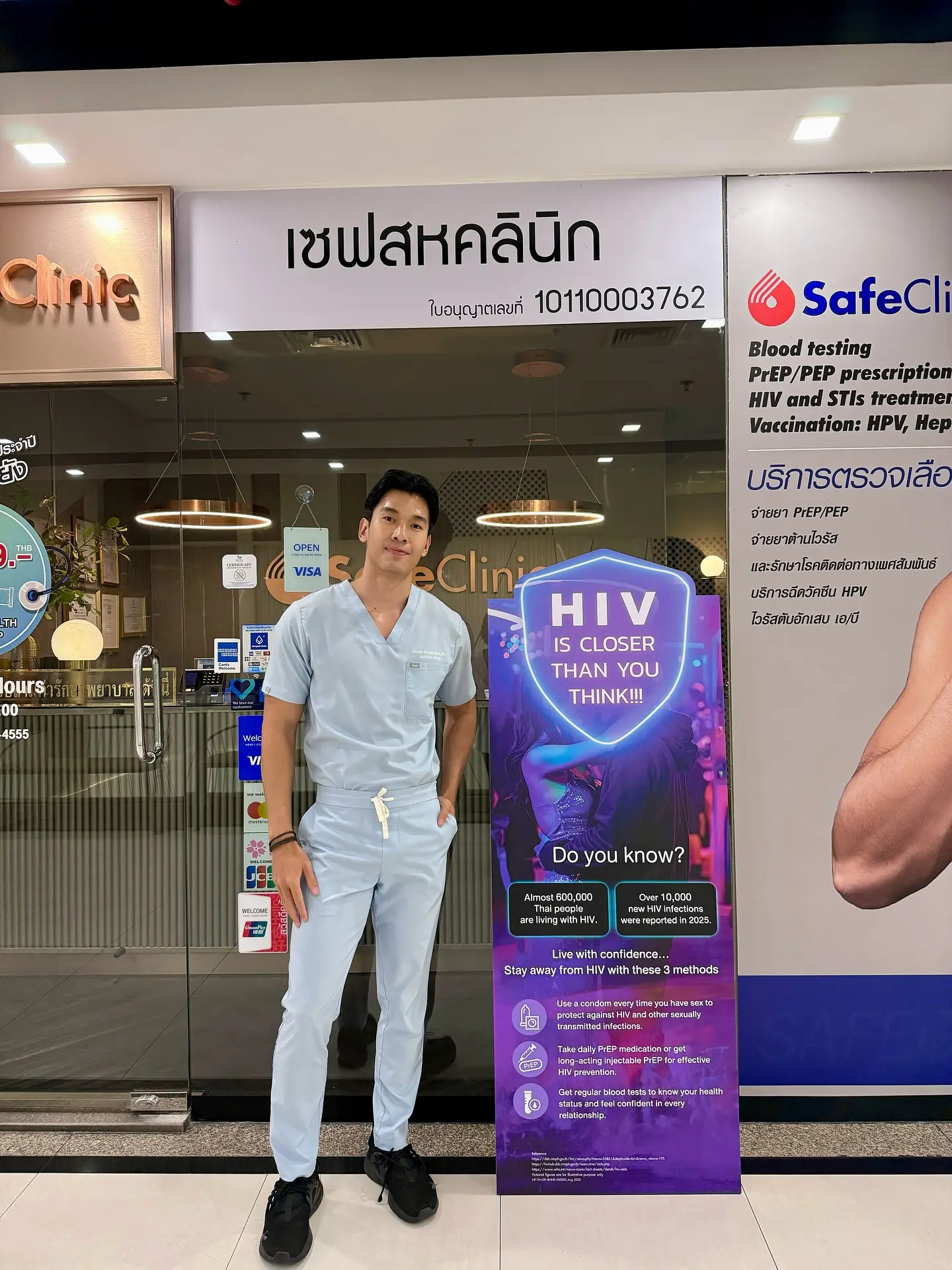
Medical Reviewer: Dr. Chaiwat Songsiriphan
Expertise: Specialist in Dermatology and Venereology (STDs)
Over 10 years of clinical experience
Latest Article Updates: March 21, 2026


