


Injectable PrEP (CAB PrEP) — HIV Prevention Every 2 Months
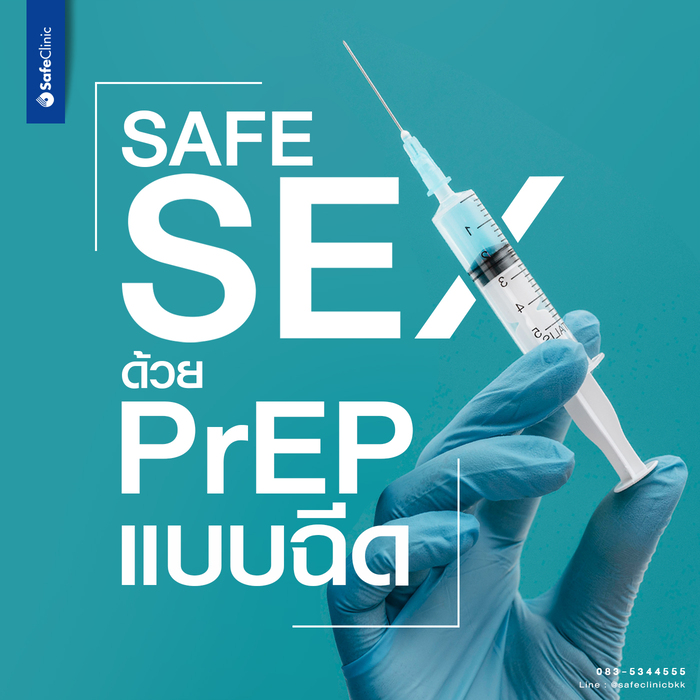
Preventing HIV infection remains an important public health priority. Beyond condoms and daily oral PrEP, there is now a new option: injectable PrEP (CAB PrEP or Apretude). This long-acting method is designed for those who prefer not to take pills every day or often forget their medication.
This article provides a clear guide to injectable PrEP—how it works, dosing schedule, benefits, limitations, costs, and frequently asked questions—so readers can make informed decisions about their prevention choices.
What is Injectable PrEP (CAB PrEP)? How is it different from Oral PrEP?
Injectable PrEP, also known as CAB PrEP / CAB-LA (Cabotegravir Long-acting), is an HIV prevention medication administered by intramuscular injection. It helps prevent HIV infection before exposure and has been approved in Thailand under the brand name Apretude.
Oral PrEP, on the other hand, refers to HIV prevention pills taken daily, most commonly the combination Tenofovir/Emtricitabine (TDF/FTC), which has been widely used for years.
Key differences between Injectable PrEP and Oral PrEP
- Form: Injection every 2 months vs daily oral pill
- Convenience: Suitable for those who find it hard to take daily medication or often forget
- Medication: Injectable PrEP uses Cabotegravir, while oral PrEP usually contains Tenofovir/Emtricitabine
Both approaches share the same goal—reducing the risk of HIV infection—but differ in administration and suitability for each individual.
How Does Injectable PrEP Work? Does it Really Prevent HIV?
Injectable PrEP (Cabotegravir) belongs to a class of drugs called integrase inhibitors. It works by blocking the enzyme HIV needs to replicate, preventing the virus from establishing infection in the body.
Once injected into the muscle, the drug slowly releases into the bloodstream and maintains protective levels for weeks. If HIV exposure occurs, the body already has sufficient drug levels to stop infection.
Clinical Evidence
- Large international studies (HPTN 083 and HPTN 084) showed that injectable Cabotegravir is about 79% more effective than daily oral PrEP.
- The World Health Organization (WHO, 2022) recommends it as a key HIV prevention option.
In summary, injectable PrEP is a highly effective method to prevent HIV, though it is best combined with other protective measures such as condom use for broader sexual health protection.
Who is Suitable for Injectable PrEP? Can Everyone Use It?
Injectable PrEP (CAB PrEP) is designed for people who want to prevent HIV infection but find daily pills inconvenient.
Suitable groups include:
- Individuals at high risk of HIV, such as men who have sex with men, sex workers, or those with HIV-positive partners
- People who often forget to take oral PrEP or find it difficult to carry medication daily
- Those who travel frequently or have work conditions that make daily dosing impractical
Use across genders
- According to research and WHO guidelines (2022), injectable PrEP is effective for both men and women
- No dosage adjustment is required based on sex or body weight
Therefore, injectable PrEP is a valid option for all genders, especially for those at high risk and those who struggle with daily medication.
Does Injectable PrEP Protect Against Other STIs?
Injectable PrEP (CAB PrEP) is specifically designed to prevent HIV infection only. It does not protect against other sexually transmitted infections (STIs) such as syphilis, gonorrhea, or HPV.
Therefore, even if you are on injectable PrEP, it is still recommended to use condoms to reduce the risk of other STIs and to achieve more comprehensive sexual health protection.
Guidelines from the World Health Organization (WHO, 2022) and the Thai Department of Disease Control emphasize that PrEP is part of a combination prevention strategy, which should include condom use, regular STI screening, and partner treatment where needed.
How to Use Injectable PrEP: How Many Times Per Year?
Injectable PrEP (Cabotegravir Long-acting) follows a structured dosing schedule, different from daily pills.
Initiation phase:
- Consult a doctor for HIV and baseline health screening
- First injection: 600 mg intramuscularly in the buttock
- Second injection: given 4 weeks later
Maintenance phase:
- After that, continue with one injection every 8 weeks (2 months)
- This equals about 6 injections per year to maintain adequate drug levels
This regimen is based on major clinical trials (HPTN 083, HPTN 084) and endorsed by the World Health Organization (WHO, 2022).
What Tests Are Required Before Starting Injectable PrEP?
Before initiating injectable PrEP, baseline health checks are necessary to ensure safety and effectiveness.
Required tests include:
- HIV test to confirm the individual is HIV-negative before starting
- Hepatitis B screening for both infection and immunity, as it may affect HIV testing results
- Kidney function test to assess overall renal health
- Liver function test, especially for those with pre-existing conditions
- Medical history review, including current medications, chronic diseases, and allergies
These assessments align with recommendations from the World Health Organization (WHO, 2022) and the Thai Department of Disease Control.
What Are the Side Effects of Injectable PrEP?
Injectable PrEP (Cabotegravir) may cause some side effects, though studies show it is generally well tolerated.
Common side effects:
- Pain, swelling, redness, or itching at the injection site
- Headache
- Nausea or vomiting
- Mild fatigue
Less common side effects:
- Low-grade fever after injection
- Vivid or abnormal dreams
- Allergic reactions (rare, medical attention required)
According to clinical trials (HPTN 083, HPTN 084), most side effects were mild and temporary, resolving within a few days after injection.
Is Injectable PrEP Really Better Than Oral PrEP?
Both forms of PrEP aim to prevent HIV infection, but they differ in administration, convenience, and suitability.
Comparison: Injectable vs Oral PrEP
|
Criteria |
Injectable PrEP (Cabotegravir) |
Oral PrEP (TDF/FTC) |
|---|---|---|
|
Administration |
Intramuscular injection every 2 months |
Daily oral pill |
|
Convenience |
No daily dosing, suitable for frequent travelers or those who forget pills |
Requires strict daily adherence |
|
Effectiveness |
Shown in studies to be ~79% more effective than oral PrEP |
Highly effective if taken consistently |
|
Side effects |
Injection site pain, mild systemic effects |
Possible kidney and bone effects in some users |
|
Best suited for |
People unable to take daily medication |
People with reliable daily routines |
|
Cost (Thailand) |
~15,000 THB per injection |
Lower monthly cost |
Conclusion: Neither option is universally “better.” The right choice depends on lifestyle, risk factors, and medical guidance.
Price of Injectable PrEP in Thailand vs Other Countries
The cost of injectable PrEP (Cabotegravir, Apretude) varies widely depending on local healthcare systems, pricing policies, and market access.
Approximate costs (2024–2025 reference data):
|
Country |
Approximate cost per injection |
Local currency → THB |
|---|---|---|
|
United States |
~3,700 USD |
~124,000 THB |
|
Australia |
~2,000 AUD |
~42,000 THB |
|
Canada |
~1,600 CAD |
~38,000 THB |
|
Malaysia |
~2,600 MYR |
~20,000 THB |
|
South Africa |
540–750 ZAR |
~1,000 THB |
|
Thailand |
~15,000 THB |
(relatively lower compared to many countries) |
Key notes
- Prices in developed countries are significantly higher than in Thailand.
- Thailand is among the countries where injectable PrEP is more affordable compared to the global average.
Steps to Receive Injectable PrEP at a Clinic
Injectable PrEP must be administered by trained healthcare professionals in a clinical setting to ensure safety and effectiveness.
Typical steps include:
- Appointment and consultation – The doctor reviews medical history, discusses suitability, and provides counseling.
- Baseline blood tests – HIV test, hepatitis B screening, kidney and liver function tests.
- First injection – 600 mg Cabotegravir, intramuscular injection into the buttock, administered by a clinician.
- Observation period – Stay at the clinic for 15–30 minutes to monitor for immediate reactions.
- Follow-up schedule – Next injection after 4 weeks, then every 2 months.
- Ongoing monitoring – Routine blood tests and physician follow-up as needed.
These steps are consistent with international clinical guidelines and ensure the safe use of injectable PrEP.
User Experiences with Injectable PrEP
Experiences from real users and clinical trial participants provide insights into how people feel about injectable PrEP (CAB PrEP).
Common feedback reported:
- Convenience: Users appreciate not having to take a daily pill and feel more confident about continuous protection.
- Injection site reactions: Many reported mild pain or swelling after injections, usually resolving within 1–2 days.
- Peace of mind: Several users noted reduced anxiety about forgetting pills and described greater freedom in daily life.
- Cost considerations: Some felt the cost was relatively high compared to oral PrEP, but many accepted it for the added convenience.
Evidence from HPTN 083 and HPTN 084 trials: Most participants expressed satisfaction with injectable PrEP, with many choosing to continue despite mild injection-site reactions. Convenience and strong efficacy were key factors in adherence.
FAQ About Injectable PrEP
How long does injectable PrEP stay in the body?
After injection, drug levels remain for several weeks. Repeat dosing every 2 months is required for ongoing protection.
Does injectable PrEP hurt?
Most people experience mild pain or swelling at the injection site, which usually resolves within a few days.
What if I miss an injection appointment?
Contact your healthcare provider immediately. In general, if it’s within 7 days from the appointment date, you can continue the injection. If it’s been more than 7 days, you might need to start over.
Do I still need condoms while on injectable PrEP?
Yes. Injectable PrEP only protects against HIV, not other sexually transmitted infections.
Can people with chronic health conditions use it?
In many cases, yes—but medical consultation is essential, especially for those with kidney, liver, or multiple medication issues.
Conclusion
Injectable PrEP represents an important innovation in HIV prevention, offering convenience and reliable protection for those at risk. While its cost may be higher compared to oral PrEP, many find the convenience and peace of mind worth the investment.
Results may vary by individual. Always consult a qualified healthcare professional for personalized medical advice.
Reference
- Guidelines on long-acting injectable cabotegravir for HIV prevention. Geneva: WHO; 2022.
- Centers for Disease Control and Prevention (CDC). PrEP for HIV Prevention. Updated 2023.
- HIV Prevention Trials Network (HPTN). HPTN 083 & HPTN 084 Studies: Cabotegravir for PrEP. Updated 2022.
- HPTN 083
- HPTN 084
- UNAIDS. Global HIV & AIDS statistics — 2023 fact sheet.
If you want to book appointment or consult more.
You can booking from website or social media this bottom section


